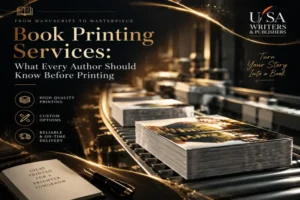
Book Printing Services: What Every Author Should Know Before Printing
A lot of first-time authors don’t realize how many decisions go into turning a manuscript into an actual physical book. Paper type. Binding. Cover finish. Print run size. Each choice shapes how the final product feels in someone’s hands. That’s exactly why book printing services exist, and why picking the right one matters more than most people expect.
Let’s walk through what to actually look for.
Why Print Quality Affects More Than Just Looks
Here’s something authors often underestimate. Readers judge books fast. Really fast.
A poorly printed book signals:
- Low production value, even if the writing inside is excellent
- Potential durability issues, pages that yellow or fall apart quickly
- A rushed, unprofessional impression before anyone reads a single word
Good printing does the opposite. It builds trust before the reader even opens the cover. That’s not vanity. That’s just how people process first impressions.
Custom Book Printing: Making the Format Fit the Story
Not every book needs the same treatment. Custom book printing lets authors and publishers control size, paper stock, cover finish, and binding style based on the actual content.
A few common customization options:
- Trim size— standard novel size, larger art book format, or something in between
- Paper weight— thicker stock for photo-heavy books, lighter stock for text-only novels
- Cover finish— matte, gloss, or soft-touch laminate
- Interior color— black and white for most fiction, full color for illustrated or photography books
- Special features— foil stamping, embossing, or dust jackets for premium editions
A children’s picture book and a dense nonfiction manual shouldn’t look or feel the same. Customization makes sure they don’t.
Finding a Book Printing Company in the USA
Location matters more than people think. Working with a book printing company USA-based often means faster turnaround, easier communication, and fewer shipping headaches compared to overseas printers.
Things worth checking before committing to one:
- Do they offer proofs before full production runs?
- What’s their typical turnaround time for the format you need?
- Can they handle both small test runs and larger print orders?
- Do they have experience with your specific genre or format (photography, children’s books, textbooks, etc.)?
Skipping this research often leads to delays or quality surprises later. Nobody wants that after months of writing.
What Makes Professional Book Printing Different
There’s a real difference between a basic print shop and professional book printing. It’s not just about having a printer. It’s about understanding the entire production process.
Professional printers typically offer:
- Color-accurate proofing before mass production
- Consistent quality across large print runs
- Proper binding techniques that hold up over time
- Guidance on file setup, bleed, and resolution requirements
Authors who skip professional guidance sometimes end up with misaligned covers, blurry images, or pages that fall out after a few reads. Not exactly the impression anyone’s going for.
Hardcover Book Printing: When Durability and Prestige Matter
Hardcover book printing tends to signal something specific: permanence, quality, gift-worthiness. It costs more, sure. But for certain projects, it’s worth every extra dollar.
Good use cases for hardcover:
- Coffee table books meant to be displayed, not tucked away
- Special or collector’s editions of a popular title
- Children’s books that need to survive rough handling
- Corporate or commemorative books meant to last decades
Hardcovers also tend to feel more “finished” as a product. That perception alone can justify a higher retail price point.
Paperback Book Printing: The Practical, Everyday Choice
On the other side, paperback book printing remains the default for most fiction and general nonfiction. It’s lighter, cheaper to produce, and easier to distribute in bulk.
Reasons paperback still dominates the market:
- Lower production cost per unit
- Lighter weight for shipping and retail stocking
- Familiar format that most readers expect for everyday reading
- Faster turnaround for print runs compared to hardcover binding
For most independent authors especially, paperback remains the practical starting point before considering a hardcover edition later.
Print-on-Demand vs. Traditional Print Runs
This decision trips up a lot of new authors. Two very different approaches exist here.
- Print-on-demand (POD)— books get printed one at a time as orders come in, reducing upfront cost but sometimes limiting customization
- Traditional print runs— bulk printing in advance, usually cheaper per unit but requires upfront investment and storage space
Neither option is universally better. It depends on expected sales volume, budget, and how much control an author wants over inventory.
Tips for a Smooth Book Printing Experience
A little preparation goes a long way here.
- Always request a physical proof before approving a full print run
- Double-check bleed and margin settings in your file setup
- Ask about minimum order quantities upfront, not after quoting
- Confirm turnaround times clearly, especially around holiday seasons
- Compare paper samples in person if possible, screens don’t show texture
Skipping these steps is where most printing headaches actually start.
Final Thoughts
Printing a book well takes more thought than most people expect going in. Whether it’s custom book printing for a unique project or straightforward paperback book printing for a debut novel, the right choices protect both the reader’s experience and the author’s reputation.
Take time picking a printer that actually understands books, not just paper and ink. It shows in the final product every time.
What’s the difference between hardcover and paperback printing?
Hardcover offers more durability and a premium feel, while paperback is lighter, cheaper, and more common for everyday reading formats.
Is print-on-demand a good option for new authors?
Yes, especially for authors uncertain about sales volume, since it reduces upfront cost and storage needs compared to bulk print runs.
How long does professional book printing usually take?
Timelines vary, but most projects range from a few weeks to over a month depending on order size and customization level.
Do I need to hire a designer before printing my book?
It’s strongly recommended, especially for cover design and interior layout, since proper file setup avoids costly printing errors.
Can small independent authors use custom book printing services?
Yes, many printers now offer flexible minimum order quantities, making custom printing accessible even for smaller print runs.
What should I check before choosing a book printing company?
Look for proofing options, realistic turnaround times, relevant format experience, and clear communication about pricing and minimum orders.