Why Professional Proofreading Services Matter More Than You Think
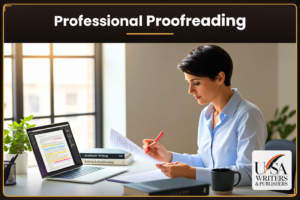
Ever sent an email, hit “send,” and then spotted a typo two seconds later? Now imagine that happening with your book manuscript, your PhD thesis, or a business contract worth six figures. That sinking feeling? It’s avoidable. That’s the whole point of Professional Proofreading Services — catching what your own eyes are too tired (or too close) to see.
I’ve worked alongside editors for years, and here’s a truth nobody tells beginner writers: even the best writers need a second pair of eyes. Not because they’re bad at writing. Because nobody can proofread their own work perfectly. Your brain autocorrects your mistakes as you read. It’s just how cognition works.
So let’s talk about what proofreading actually is, why it’s not the same as editing, and how to pick a service that won’t waste your money.
What Exactly Does Proofreading Cover?
Proofreading is the final polish. It’s not about restructuring your paragraphs or questioning your plot choices. It’s about:
- Spelling errors and typos
- Grammar and punctuation mistakes
- Consistency (spelling of names, formatting, tense shifts)
- Spacing, indentation, and layout issues
- Missing or duplicated words
That’s it. If someone starts rewriting your sentences or suggesting you cut a whole chapter, that’s editing, not proofreading. Know the difference before you pay for a service.
Manuscript Proofreading Services: A Different Beast
Books are long. Really long. A 90,000-word novel isn’t just “more work” than a five-page essay — it’s a whole different challenge. Manuscript Proofreading Services need to track consistency across hundreds of pages: Did your character’s eye color change from blue to green in chapter 12? Did you spell the fictional city “Meridian” one way in Act One and “Meredian” in Act Three? These things happen. Constantly.
A good manuscript proofreader will also flag:
- Formatting inconsistencies (especially if you’re self-publishing)
- Dialogue punctuation errors (a shockingly common issue)
- Timeline slip-ups tied to grammar, like tense confusion in flashbacks
- Chapter heading and numbering mismatches
If you’re publishing independently, this step isn’t optional. Readers leave reviews about typos. Harsh, but true.
Why “USA” Matters When You Search for Proofreading Services
Here’s something people overlook. Searching for Proofreading Services USA isn’t just about location convenience — it’s about standards. American English has its own spelling conventions (“color” not “colour,” “organize” not “organise”), its own punctuation habits (that Oxford comma debate is real), and its own audience expectations.
If your readers or clients are US-based, you want a proofreader who thinks in US English by default, not one who keeps sliding into British spellings out of habit. Small thing. Big impact on how professional your final document looks.
English Proofreading Services for Non-Native Writers
This one’s close to my heart. A huge number of brilliant researchers, authors, and business professionals write in English as a second (or third) language. Their ideas are sharp. Their English, understandably, sometimes isn’t quite native-level yet.
English Proofreading Services built for this audience do more than fix commas. They:
- Smooth out awkward phrasing that’s grammatically “correct” but sounds off
- Fix article usage (a/an/the — genuinely one of English’s trickiest features)
- Adjust word order to match natural English rhythm
- Preserve your voice while making the language flow
There’s no shame in needing this. Native English speakers get proofread too. Everyone benefits from a second reader.
Document Proofreading Services: Beyond Books
Not everything is a novel. Document Proofreading Services cover the unglamorous-but-critical stuff:
- Resumes and cover letters (one typo can cost you an interview)
- Business proposals and reports
- Academic papers and dissertations
- Legal and contract documents
- Website copy and marketing materials
Each of these has different stakes. A typo in a blog post is embarrassing. A typo in a legal contract can be expensive. Match the level of scrutiny to the stakes.
How to Choose a Proofreading Service (Without Getting Burned)
A few things worth checking before you hand over your manuscript:
- Sample edits.Any legitimate service will proofread a short sample for free or cheap so you can see their style.
- Turnaround time.Rushed proofreading is bad proofreading. Be wary of same-day promises on long documents.
- Subject familiarity.A proofreader who’s edited fantasy novels may not be the right fit for a medical research paper.
- Human proofreaders, not just software.Grammar tools miss context, tone, and nuance. A human catches what software can’t.
- Clear pricing.Per-word or per-page rates should be upfront, not buried.
Honestly, the best sign of a good service is simple: they ask you questions about your document before starting. That means they care about getting it right, not just getting it done.
The Bottom Line
Good writing deserves a clean final version. Whether it’s a 300-page manuscript or a two-page cover letter, Professional Proofreading Services exist because writers — all writers, even great ones — miss their own mistakes. It’s not a flaw. It’s just how the brain works when you’re too close to the material.
So before you hit “publish,” “submit,” or “send,” consider getting a second set of trained eyes on it. Your future self, reading the reviews or the feedback, will thank you.
Q: What’s the difference between proofreading and editing?
Editing improves structure, clarity, and content — it might involve rewriting sentences or restructuring paragraphs. Proofreading is the final check for spelling, grammar, punctuation, and formatting errors. Most documents need editing first, then proofreading last.
Q: How much does professional proofreading cost?
It varies a lot depending on document length, complexity, and turnaround time. Per-word or per-page pricing is common. Academic and legal documents often cost more due to the specialized knowledge required.
Q: How long does manuscript proofreading take?
For a full-length novel, expect anywhere from one to three weeks, depending on length and the proofreader’s workload. Rushing this step usually means lower quality.
Q: Can I just use Grammarly instead of a human proofreader?
Grammar tools are helpful for a first pass, but they miss context, tone, awkward phrasing, and subtle consistency issues. For anything important — a book, a thesis, a business document — a human proofreader catches things software simply can’t.
Q: Do I need proofreading if English isn’t my first language?
Yes, and there’s no shame in it. English proofreading services designed for non-native writers focus on natural phrasing and flow, not just grammar rules, so your writing sounds fluent and confident.
Q: Is proofreading necessary if I’m self-publishing?
Absolutely. Readers notice typos, and reviews often mention them. Since there’s no traditional publishing house catching errors for you, proofreading becomes even more essential for self-published authors.